Creatine monohydrate vs. other forms of creatine – which one works best?
02.04.2026Recommended products
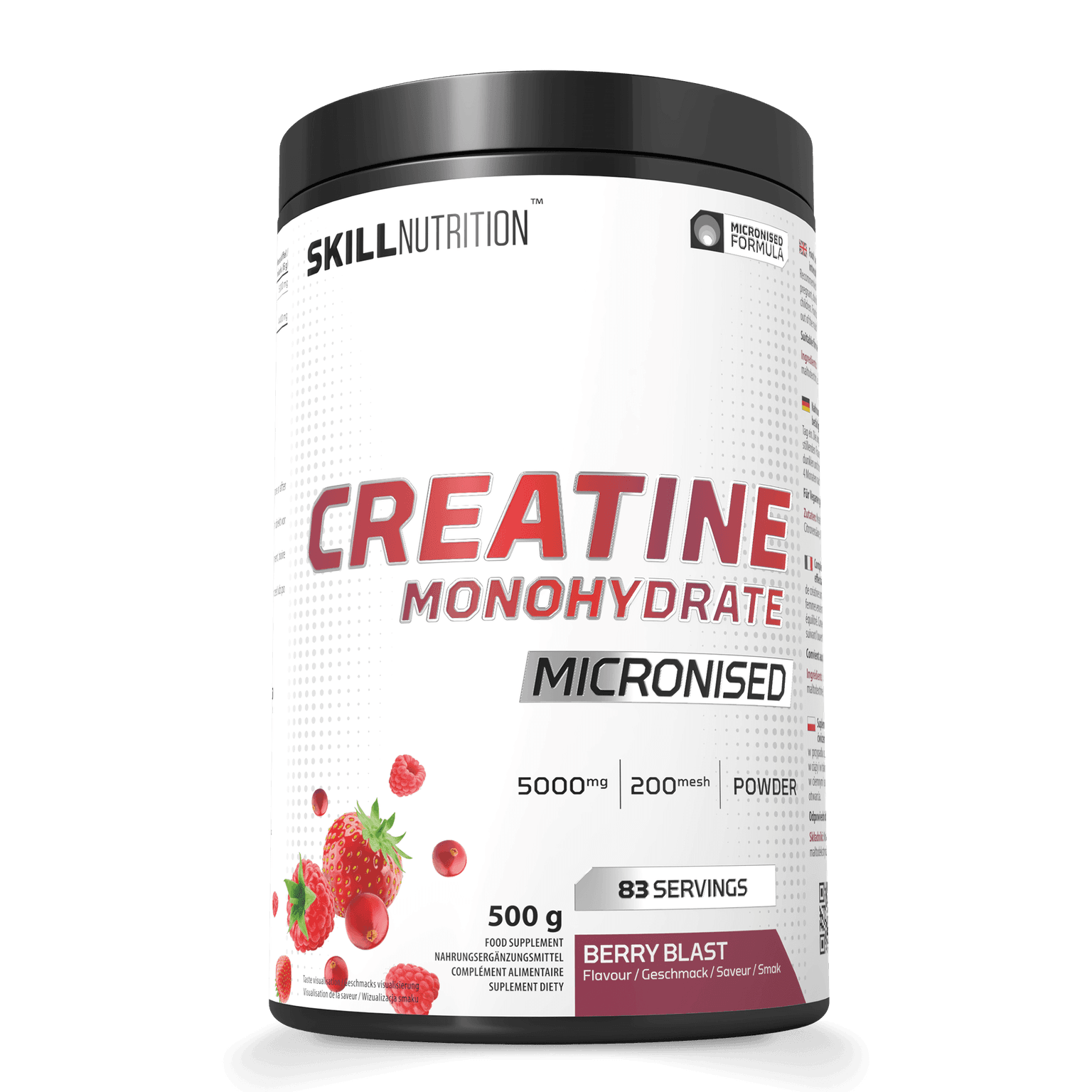
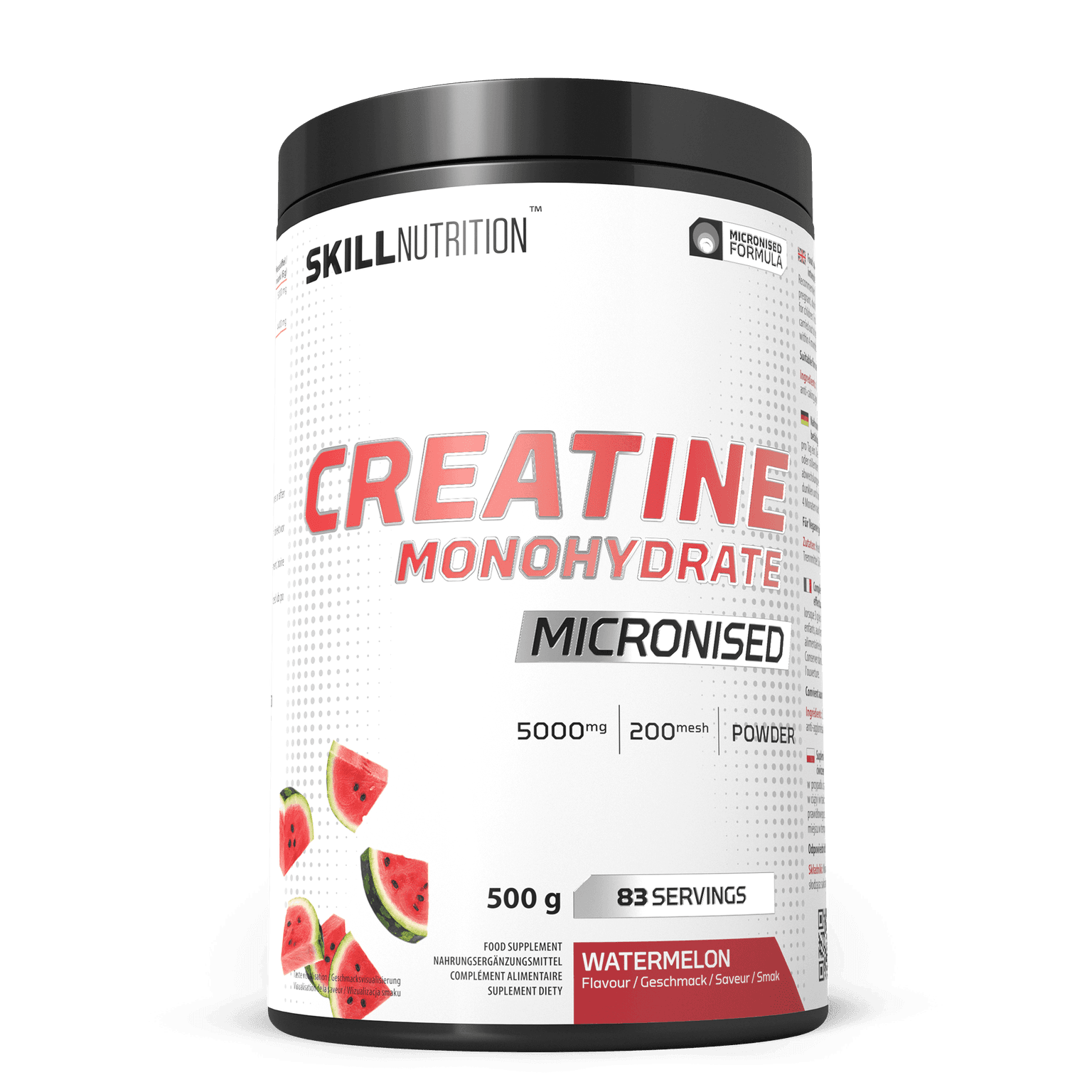
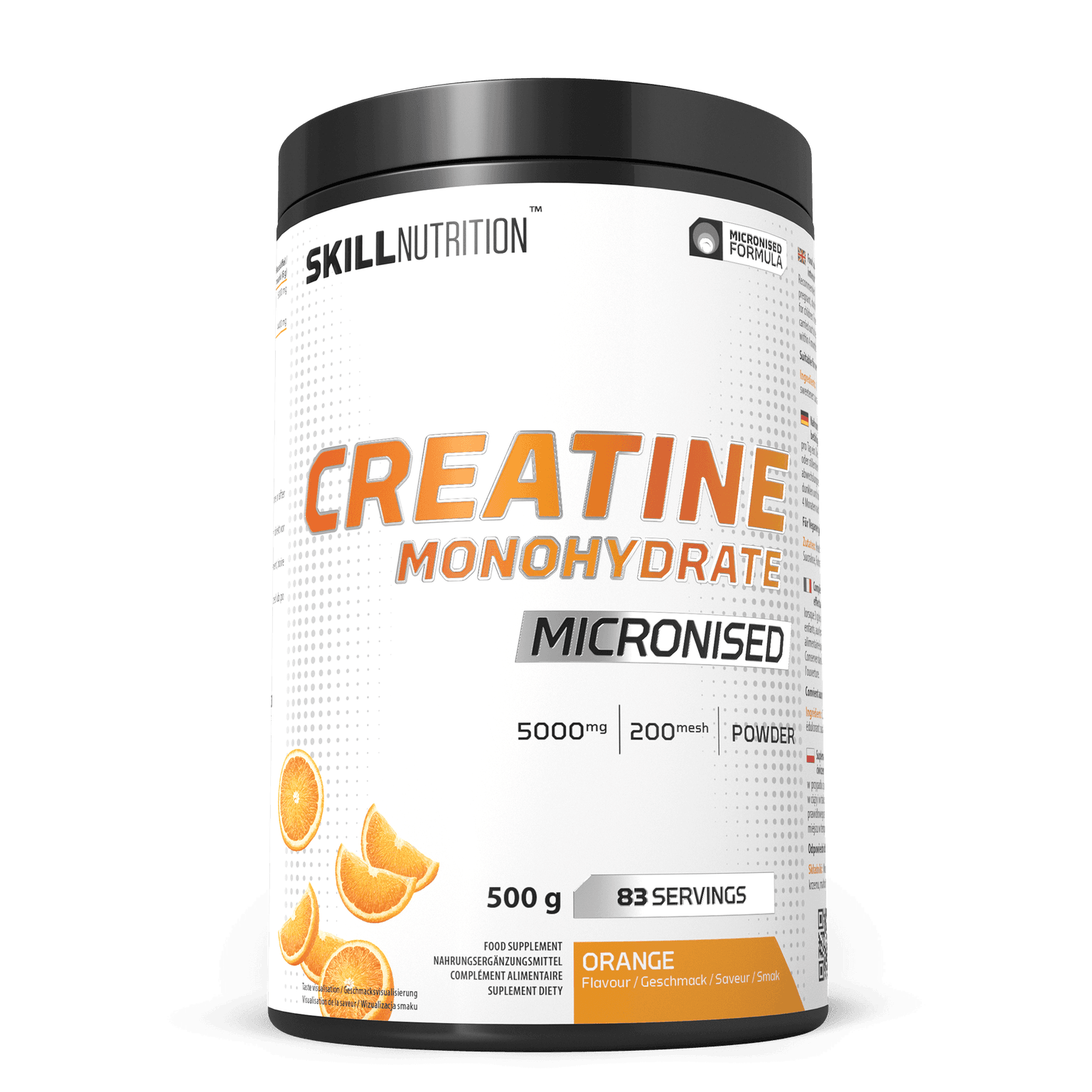
When it comes to supplements, trends tend to change faster than the weather—but one “athlete” has held the top spot on the podium for decades: creatine. Although shelves are packed with modern forms like malate or hydrochloride, science remains unwavering. Does more expensive mean better? Before you get tempted by exotic-sounding names, learn the facts about the “king of supplements.” Let’s take a closer look at why classic creatine monohydrate still takes first place.
Why creatine at all? Fuel for your muscles
Regardless of whether the label says monohydrate, malate, or HCL, the starting point is the same: creatine is meant to support the body when rapid energy and high intensity matter most. That’s why it’s so popular in strength sports, sprinting, interval training, and team sports.
Its mechanism is very simple. In the muscles, creatine helps regenerate ATP molecules. This is the basic unit of “energy currency” that your muscles use to pay for every contraction during intense effort. The faster your body can restore ATP, the easier it is to maintain high performance across successive sets, reps, or sprints [1].

Thanks to this mechanism, regular creatine intake delivers clear, scientifically supported benefits. The official health claim (EFSA) leaves no doubt: “Creatine increases physical performance in successive bursts of short-term, high-intensity exercise.” To achieve this effect, a regular intake of just 3 g of creatine per day is sufficient [2].
In practice, this means you can perform that one decisive extra rep or maintain maximum speed for a fraction of a second longer. No matter which form of creatine you choose, the mechanism remains the same—the goal is to saturate the muscles and be ready to generate energy when your heart rate spikes. This raises an important question: if creatine is supposed to do the same thing, why are there so many “better” versions on the market? Is there a form that works better than classic monohydrate?
Creatine monohydrate – the gold standard backed by research
Let’s start with a fact: creatine monohydrate is probably one of the most thoroughly studied dietary supplements in the world. While new, “revolutionary” forms of creatine come and go, monohydrate is supported by thousands of independent clinical studies conducted over decades. Nearly all key evidence for creatine’s effectiveness in sports is based on this form.
The data is quite clear: monohydrate leads to near-maximal saturation of muscles with phosphocreatine [3]. Why does that matter? Imagine your car’s fuel tank—once it’s filled to the top, you can’t add more fuel, even if it’s “premium grade.” If monohydrate already fills your muscles to the brim, no other, more expensive form (like HCL, malate, or esters) can do more.
Importantly, most alternative forms of creatine are based on single studies that rarely demonstrate any real advantage over classic “mono” in terms of performance or physique development. Moreover, monohydrate is a highly stable chemical form. Unlike some newer variants, it does not rapidly degrade in water or stomach acid [4]. This means that nearly every scoop you take actually reaches where it should—your muscle cells.
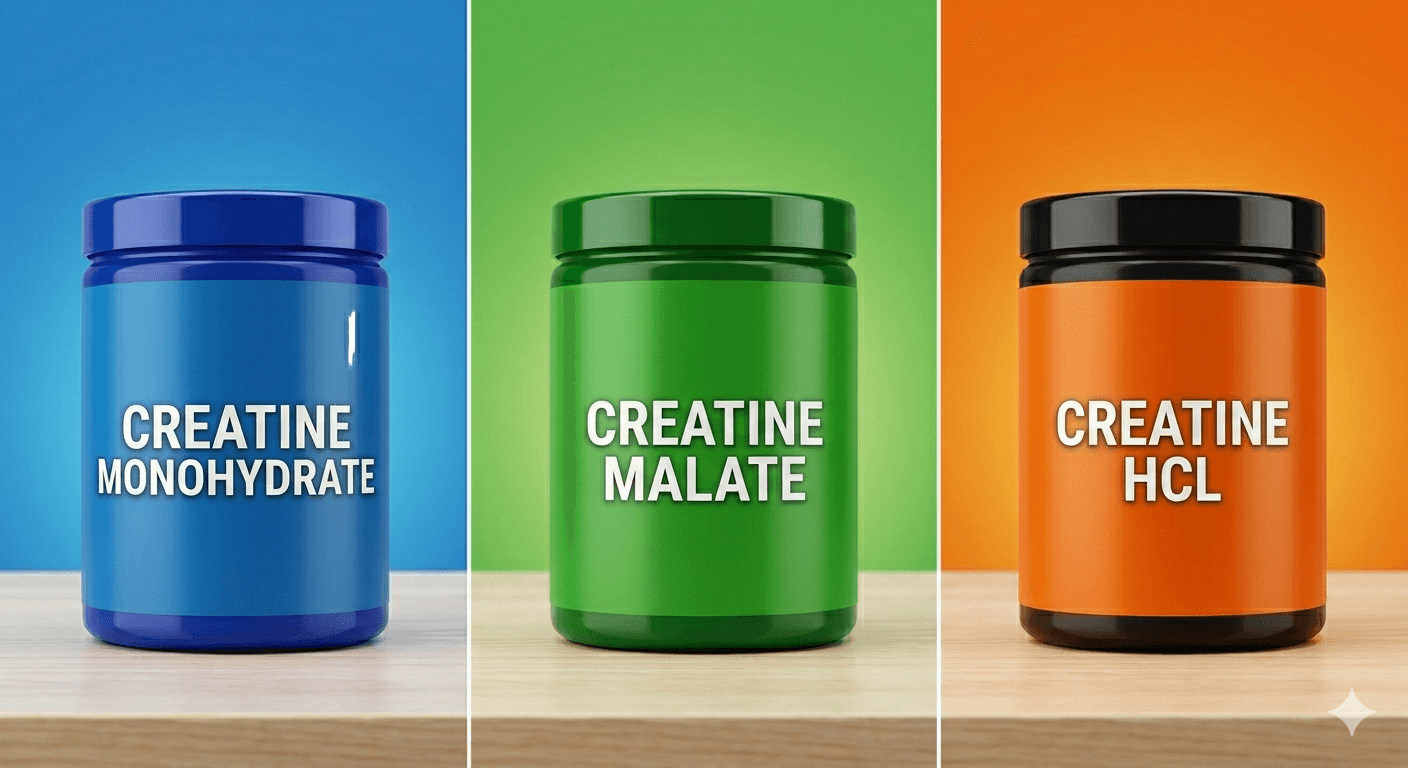
Other forms of creatine: HCL, malate, esters – are they better?
The supplement market loves new names because they sound like progress—and creatine is no exception. Alongside classic monohydrate, new forms have emerged claiming “better absorption,” “no water retention,” or “stronger effects.” In reality, however, creatine still has one job: to increase muscle stores and support short, intense training sessions.
Among the most common alternative forms, you’ll find:
- Creatine malate (TCM) – often marketed as “non-water-retaining,” but typically contains less pure creatine per serving than monohydrate.
- Creatine HCL – usually promoted as “more soluble” and “gentler on the stomach.” While it may dissolve more easily, solubility in a glass doesn’t automatically translate to better training results.
- Creatine esters – esterification is supposed to suggest “better absorption” and “stronger effects,” but these claims are debatable, and the form has not earned the same scientific trust as monohydrate.
The conclusion is simple: other forms may look more modern, but when it comes to results and cost-effectiveness, monohydrate remains the most rational choice.
Myths and facts: what creatine really does—and what’s just gym folklore
Creatine has one “drawback”—it’s so popular that over the years it has accumulated half-truths, simplifications, and word-of-mouth myths. And since people love catchy phrases (“it makes you bloated,” “it damages kidneys,” “it doesn’t work without loading”), these myths persist. Time to clear them up.
1. Myth: “Monohydrate makes you bloated like a balloon”
This is one of the most common claims. Creatine can increase water content in the body, but what matters is where that water is stored. It’s typically intracellular retention—inside the muscles. For many people, this simply means a fuller muscle appearance, not subcutaneous “puffiness.” If someone experiences noticeable bloating, diet (e.g., salt intake or processed foods) is often a bigger factor than creatine itself.
2. Myth: “Creatine damages the kidneys”
This topic comes up regularly because it sounds serious. However, creatine is one of the most extensively studied supplements and is considered safe for healthy individuals when used as directed. Of course, people with medical conditions or under medical supervision should consult a professional before supplementation—as with any dietary supplement.
3. Myth: “You need a loading phase, otherwise it doesn’t work”
A loading phase is not mandatory. It’s an option, but many people choose a simpler approach: consistent daily intake at a moderate dose. The end result—gradual saturation of muscle creatine stores—is still achieved, just at a slower pace. For many, this is more convenient and better tolerated.
4. Myth: “Creatine is only for bulking”
Another classic. Creatine is often associated with strength training because its effects are easy to observe there: better performance in high-intensity sets and improved repeatability. But it’s not just for bodybuilders. Its approved health claim relates to performance in repeated short bursts of high-intensity exercise, which applies to far more activities than just building muscle mass.
Summary – which creatine works best?
Looking at store shelves, it’s easy to think that something “better” is constantly emerging. But creatine is not a supplement that needs a revolution. Its role is very specific: to increase muscle creatine stores and support short, intense efforts. In this case, what wins is not what sounds most modern, but what works most reliably and predictably.
The answer is simple: monohydrate.
It’s the form behind most research. It’s the one that brings muscles close to maximal saturation. And it delivers the most predictable effects.
There’s also one more argument that often outweighs all marketing claims combined: value for money. Monohydrate is usually the cheapest form of creatine, yet also the most proven. Paying 2–3 times more for HCL, malate, or esters doesn’t mean results will come 2–3 times faster. At best, you end up with the same mechanism—just in more expensive packaging.
Are other forms “bad”? Not necessarily. They may be convenient for people who prefer a certain solubility or taste. But if your goal is effectiveness and a rational choice, monohydrate still remains number one.
Sources:
- de Poli RAB, Roncada LH, Malta ES, Artioli GG, Bertuzzi R, Zagatto AM. Creatine Supplementation Improves Phosphagen Energy Pathway During Supramaximal Effort, but Does Not Improve Anaerobic Capacity or Performance. Front Physiol. 2019 Apr 10;10:352. doi: 10.3389/fphys.2019.00352. PMID: 31024332; PMCID: PMC6468287.
- European Food Safety Authority. (2011). Scientific Opinion on the substantiation of health claims related to creatine and increase in physical performance during short-term, high intensity, repeated exercise bouts. EFSA Journal, 9(7), 2303. https://doi.org/10.2903/j.efsa.2011.2303
- Harris RC, Söderlund K, Hultman E. Elevation of creatine in resting and exercised muscle of normal subjects by creatine supplementation. Clin Sci (Lond). 1992 Sep;83(3):367-74. doi: 10.1042/cs0830367. PMID: 1327657.
- Jäger R, Purpura M, Shao A, Inoue T, Kreider RB. Analysis of the efficacy, safety, and regulatory status of novel forms of creatine. Amino Acids. 2011 May;40(5):1369-83. doi: 10.1007/s00726-011-0874-6. Epub 2011 Mar 22. PMID: 21424716; PMCID: PMC3080578.