

Get Slope-Ready: Your 4-Week Ski & Snowboard Conditioning Plan
26.11.2026Recommended products

Planning your first ski or snowboard trip of the season? Before packing your gear, make sure your body is ready for the effort. Spending several hours on the slopes is a major test for your legs, especially after a break of many months. November is the perfect time to build up your strength, balance, and mobility. Where should you start, and how can you gradually increase the intensity? Here is a 4-week training plan designed to get you in peak shape before hitting the slopes.
Week 1: Start with Mobility and Movement Control
Begin with two short workout sessions, leaving at least one rest day in between. Warm up with a few minutes of marching in place, then complete:
8–10 chair squats – Stand with your back to a sturdy chair, feet hip-width apart. Slowly lower your hips as if sitting down. Lightly tap the seat with your glutes and stand back up, keeping your heels firmly planted on the floor the entire time.
8 knee-to-wall drives per leg – Face a wall, placing one foot a few centimeters away and the other stepped back. Bend your front knee toward the wall without lifting your front heel. Return to the starting position and repeat. If your heel lifts, move your foot closer to the wall.
6 reps of 90/90 hip switches – Sit on the floor with knees bent and feet wider than hip-width. Place your hands behind you for support. Slowly lower both knees to the right until one leg rests in front of you and the other to your side. Return to center, then drop your knees to the left. Alternate sides smoothly without forcing your legs down.
20-second single-leg balance holds per leg – Stand near a wall, lift one foot a few centimeters off the floor, and hold your balance. Lightly touch the wall for support if needed. Switch sides.
Start with just one round. Keep all movements within a comfortable range of motion, moving without pain or rushing.
Week 2: Strengthen Your Thighs and Hip Stability
On the slopes, your thighs work continuously to absorb shocks, control turns, and manage braking. You can train them for this demand by slowing down the lowering phase of your squat. This is eccentric training—your muscles produce force while lengthening under tension.
Schedule two workouts with at least one rest day between them. Continue warming up with a few minutes of marching in place, followed by the hip and ankle mobility drills from Week 1. Then perform two sets of each exercise below:
8 chair squats – Perform these as in Week 1, but lower your hips for a full 3 seconds on every rep.
6 reverse lunges per leg – From a standing position, step one foot backward. Bend both knees, lower your hips slightly, and push back up to standing. Lightly hold the back of a chair for balance if needed.
8 looped resistance band lateral walks (each direction) – Place a mini-band just above your knees and soften your stance with a slight bend in your legs. Take eight small lateral steps to the right, bringing your left foot in without letting your feet touch. Repeat the sequence back to the left.
Rest for about a minute between sets. Keep your knees tracking directly over your toes, preventing them from caving inward.

Week 3: Combine Strength and Balance
Now it is time to introduce unilateral exercises where each leg works independently. Keep the squats and lateral band walks during your two weekly sessions, replace the lunges with step exercises, and add a single-leg stability drill:
Step-up with slow step-down (2 sets of 6 reps per leg) – Stand facing the bottom step of a staircase and hold the handrail. Place your right foot onto the step, step up, and bring your left foot up beside it. Slowly lower your left foot back down to the floor behind you by bending your right knee. Bring your right foot down to finish the rep. Complete six repetitions, then switch legs.
Single-leg front toe tap (2 sets of 5 reps per leg) – Stand next to a wall so you can touch it for stability. Shift your weight onto your right leg and soften your right knee. Reach your left foot forward, lightly tap the floor with your toes, and pull it back to the start. Keep your body weight supported by your right leg throughout. Complete five reps, then switch sides.
On a separate day, add 20–30 minutes of brisk walking or cycling at a conversational pace. If you start losing control over your form, cut the set short.
Week 4: Consolidate Your Fitness and Taper Before the Trip
Is departure day right around the corner? This is the ideal moment to dial back training volume. At the start of the week, complete two shorter sessions using familiar exercises—just one set of each. Maintain a steady, relaxed pace without adding heavier bands or attempting new, demanding movements.
Spend the final 2–3 days prioritizing walking, gentle hip and ankle mobility drills, and restorative sleep. Once you reach the mountain, start easy. Take a few minutes before clicking into your bindings for brisk walking, squats, and arm swings. Treat your opening runs as a gradual warm-up: choose easier slopes and take plenty of breaks before fatigue compromises your technique.

Recovery Between Workouts – Dial In Your Nutrition
Getting slope-ready does not stop when your workout ends. Prioritize restful sleep, consistent meals, and dedicated recovery time. Ensure your diet includes ample protein, which contributes to the growth and maintenance of muscle mass [1]. High-protein staples include eggs, dairy, fish, and legumes. If hitting your daily protein target through whole foods is challenging, supplement your intake with a shake made with Vanilla Milkshake protein powder by Skill Nutrition.
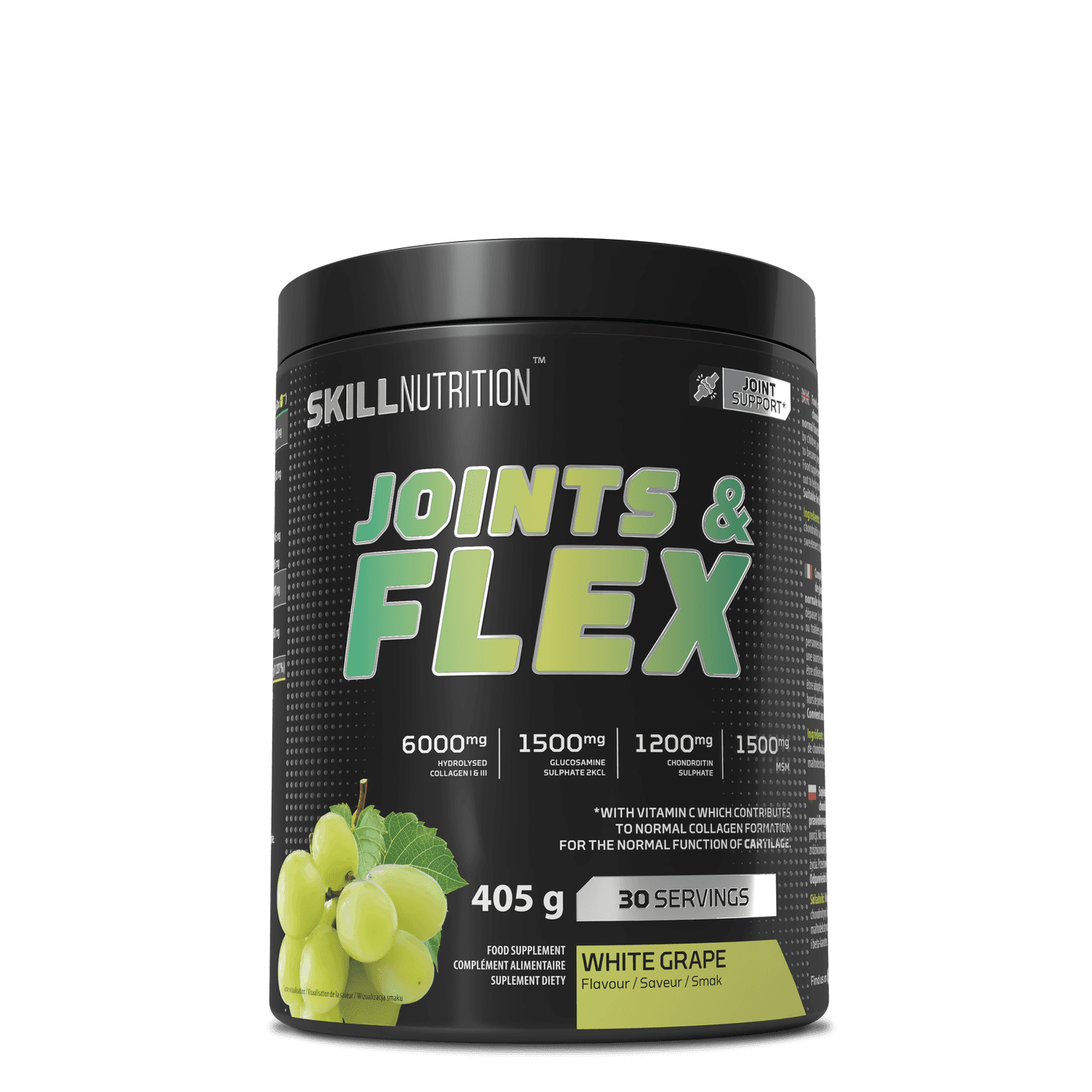
Do not forget vitamin C, which contributes to normal collagen formation for the normal function of cartilage and bones [2]. Add bell peppers, fresh parsley, and citrus fruits to your daily meals. You can also find vitamin C in Joints & Flex by Skill Nutrition, an easy addition to a balanced, varied diet. Remember: regular physical activity, proper nutrition, and restorative rest are habits worth maintaining year-round—not just in the four weeks leading up to your ski trip.

References:
EFSA Panel on Dietetic Products, Nutrition and Allergies (NDA). (2010). Scientific opinion on the substantiation of health claims related to protein and increase in satiety leading to a reduction in energy intake (ID 414, 616, 730), contribution to the maintenance or achievement of a normal body weight (ID 414, 616, 730), maintenance of normal bone (ID 416) and growth or maintenance of muscle mass (ID 415, 417, 593, 594, 595, 715) pursuant to Article 13(1) of Regulation (EC) No 1924/2006. EFSA Journal, 8(10), Article 1811.
https://doi.org/10.2903/j.efsa.2010.1811 EFSA Panel on Dietetic Products, Nutrition and Allergies (NDA). (2009). Scientific opinion on the substantiation of health claims related to vitamin C and protection of DNA, proteins and lipids from oxidative damage (ID 129, 138, 143, 148), antioxidant functi
on of lutein (ID 146), maintenance of vi sion (ID 141, 142), collagen formation (ID 130, 131, 136, 137, 149), function of the nervous system (ID 133), function of the immune system (ID 134), function of the i mmune system during and after extreme physical exercise ( ID 144), non-haem iron absorption (ID 132, 147), energy-yielding metabolism (ID 135), and relief in c ase of irritation in the upper respiratory trac t (ID 1714, 1715) pursuant to A rticle 13(1) of Regulation (EC) No 1924/2006. EFSA Journal, 7(9), Article 1226. https://doi.org/10.2903/j.efsa.2009.1226