How Citrulline Works: How Nitric Oxide Supports Your Muscles
11.06.2026Table of contents
- 1.Citrulline: What It Is and Its Role in the Body
- 2.The "Muscle Pump" Effect: What Really Lies Behind This Feeling?
- 3.Citrulline Malate: Why Is This Form So Frequently Chosen?
- 4.How Do Athletes Most Frequently Use Citrulline?
- 5.Citrulline: What It Is and Its Role in the Body
- 6.The "Muscle Pump" Effect: What Really Lies Behind This Feeling?
- 7.Citrulline Malate: Why Is This Form So Frequently Chosen?
- 8.How Do Athletes Most Frequently Use Citrulline?
- 9.Citrulline: What It Is and Its Role in the Body
- 10.The "Muscle Pump" Effect: What Really Lies Behind This Feeling?
- 11.Citrulline Malate: Why Is This Form So Frequently Chosen?
- 12.How Do Athletes Most Frequently Use Citrulline?
- 13.Citrulline: What It Is and Its Role in the Body
- 14.The "Muscle Pump" Effect: What Really Lies Behind This Feeling?
- 15.Citrulline Malate: Why Is This Form So Frequently Chosen?
- 16.How Do Athletes Most Frequently Use Citrulline?
Citrulline: What It Is and Its Role in the Body
Citrulline is an amino acid that frequently appears in the context of training and the so-called "muscle pump." Although it is not a typical building block of muscle, it participates in processes crucial for cardiovascular system function during exercise. What role does nitric oxide play in this, and why do athletes so eagerly reach for citrulline before a workout? We answer the most important questions.
What is Citrulline and What is Its Role in the Organism?
Citrulline is an amino acid that occurs naturally in the body. It owes its name to the watermelon (Citrullus lanatus in Latin), from which it was first isolated. Unlike leucine or valine, it is not directly incorporated into muscle proteins, which is why it is often referred to as a "non-protein" amino acid. [1] However, this does not mean that citrulline is biologically inactive—on the contrary, it participates in several vital metabolic pathways.
From the perspective of physically active individuals, the most important aspect is that after ingestion, citrulline can be converted into arginine within the body. It is from arginine that nitric oxide (NO) is produced—a signaling molecule responsible for regulating blood vessel tension. [2]
When there is an increased production of nitric oxide in the body, physiology refers to the phenomenon of vasodilation—a temporary widening of blood vessels. This helps optimize the conditions for transporting blood to working tissues. [3]
During a workout, muscles require efficient transport of oxygen and energy substrates, such as glucose. At the same time, metabolic waste products are generated and must be removed from the working muscle fibers. It is under these conditions that the role of the circulatory system becomes particularly prominent. Studies describe the involvement of nitric oxide in regulating vascular tone, which can promote more efficient blood flow within the muscles and provide support for the body during demanding training sessions. [3]

The "Muscle Pump" Effect: What Really Lies Behind This Feeling?
Many gym-goers associate the effects of citrulline primarily with the characteristic feeling of muscle "fullness" during a set. Universally known as the muscle pump, and though mainly associated with a visual effect in the mirror, concrete physiological processes are happening in the background.
Increased blood flow to working muscles is one of the factors influencing the dynamics of transporting oxygen and components used in energy metabolism. Simultaneously, the volume of fluids within the muscle tissue increases, leading to a rise in intracellular pressure. This state is linked to the feeling of muscle "fullness" and tightness during intense exercise. [4]
Scientific literature points out that this temporary increase in blood supply and cell volume acts as a stimulus that the body may interpret as a signal for training adaptation. However, this does not mean it has a direct muscle-building effect, but rather creates an environment conducive to regeneration processes and adaptation to physical stress. [5] Therefore, the "pump" is not just an aesthetic effect, but also an interesting example of how the circulatory system and metabolism work together with muscles during a workout.
Citrulline Malate: Why Is This Form So Frequently Chosen?
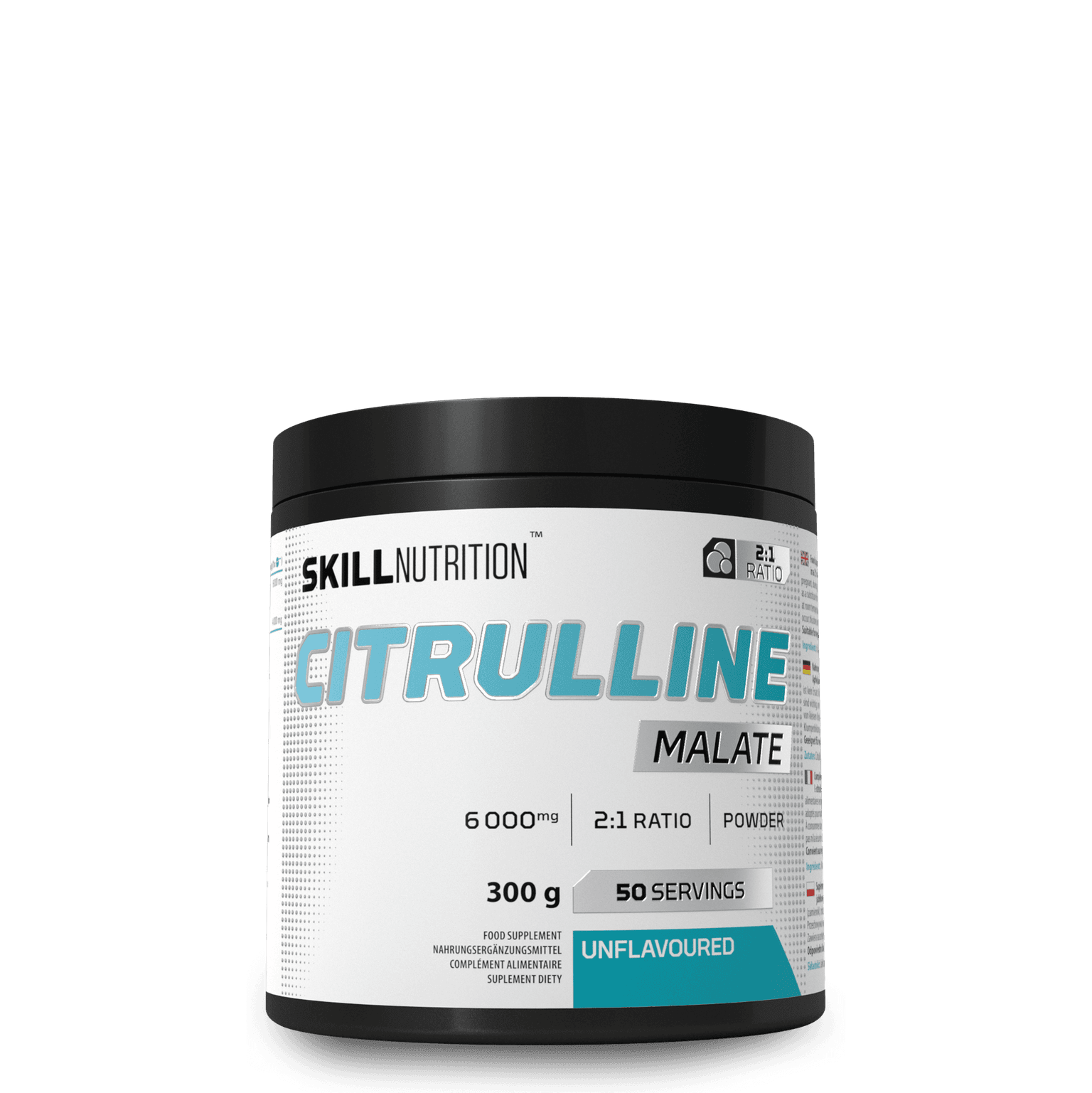
In the ingredient lists of many pre-workouts and peri-workout supplements, citrulline appears in the form of citrulline malate—a combination of the amino acid with malic acid. This form is no coincidence. Malic acid is a compound that naturally participates in the Krebs cycle—a series of reactions occurring in the mitochondria that are responsible for generating energy in the form of ATP. [6]
Therefore, exercise science literature highlights that citrulline malate combines two elements: the role of citrulline in the production of nitric oxide, and the role of malic acid in cellular energy production processes. [7] Active individuals choose this form because it aligns with the physiological processes related to circulation and cellular energy production that take place during intense exertion.
How Do Athletes Most Frequently Use Citrulline?
In supplementation plans, citrulline most commonly appears as an ingredient used before starting a training session. This is due to its involvement in the processes leading to the formation of nitric oxide, and the fact that these metabolic conversions require some time. Therefore, protocol descriptions frequently recommend taking it approximately 30–45 minutes before starting a workout. [8]
Regarding quantities, scientific publications and sports nutrition papers most frequently cite servings of 3–6 g of citrulline malate per session. [8] However, it is important to remember that these are ranges found in research and descriptions of athletic practice, rather than a promise of specific results. They should therefore be treated as guidelines for orientation rather than hard rules, as every organism can react to supplementation slightly differently.

Sources:
Curis E, Nicolis I, Moinard C, Osowska S, Zerrouk N, Bénazeth S, Cynober L. Almost all about citrulline in mammals. Amino Acids. 2005 Nov;29(3):177-205. doi: 10.1007/s00726-005-0235-4. Epub 2005 Aug 8. PMID: 16082501.
Schwedhelm E, Maas R, Freese R, Jung D, Lukacs Z, Jambrecina A, Spickler W, Schulze F, Böger RH. Pharmacokinetic and pharmacodynamic properties of oral L-citrulline and L-arginine: impact on nitric oxide metabolism. Br J Clin Pharmacol. 2008 Jan;65(1):51-9. doi: 10.1111/j.1365-2125.2007.02990.x. Epub 2007 Jul 27. PMID: 17662090; PMCID: PMC2291275.
Moncada S, Palmer RM, Higgs EA. Nitric oxide: physiology, pathophysiology, and pharmacology. Pharmacol Rev. 1991 Jun;43(2):109-42. PMID: 1852778.
Schoenfeld BJ. Potential mechanisms for a role of metabolic stress in hypertrophic adaptations to resistance training. Sports Med. 2013 Mar;43(3):179-94. doi: 10.1007/s40279-013-0017-1. PMID: 23338987.
Häussinger D. The role of cellular hydration in the regulation of cell function. Biochem J. 1996 Feb 1;313 ( Pt 3)(Pt 3):697-710. doi: 10.1042/bj3130697. PMID: 8611144; PMCID: PMC1216967.
Akram M. Citric acid cycle and role of its intermediates in metabolism. Cell Biochem Biophys. 2014 Apr;68(3):475-8. doi: 10.1007/s12013-013-9750-1. PMID: 24068518.
Figueroa A, Trivino JA, Sanchez-Gonzalez MA, Vicil F. Oral L-citrulline supplementation attenuates blood pressure response to cold pressor test in young men. Am J Hypertens. 2010 Jan;23(1):12-6. doi: 10.1038/ajh.2009.195. Epub 2009 Oct 22. PMID: 19851298.
Gonzalez AM, Trexler ET. Effects of Citrulline Supplementation on Exercise Performance in Humans: A Review of the Current Literature. J Strength Cond Res. 2020 May;34(5):1480-1495. doi: 10.1519/JSC.0000000000003426. PMID: 31977835.
Citrulline: What It Is and Its Role in the Body
Citrulline is an amino acid that frequently appears in the context of training and the so-called "muscle pump." Although it is not a typical building block of muscle, it participates in processes crucial for cardiovascular system function during exercise. What role does nitric oxide play in this, and why do athletes so eagerly reach for citrulline before a workout? We answer the most important questions.
What is Citrulline and What is Its Role in the Organism?
Citrulline is an amino acid that occurs naturally in the body. It owes its name to the watermelon (Citrullus lanatus in Latin), from which it was first isolated. Unlike leucine or valine, it is not directly incorporated into muscle proteins, which is why it is often referred to as a "non-protein" amino acid. [1] However, this does not mean that citrulline is biologically inactive—on the contrary, it participates in several vital metabolic pathways.
From the perspective of physically active individuals, the most important aspect is that after ingestion, citrulline can be converted into arginine within the body. It is from arginine that nitric oxide (NO) is produced—a signaling molecule responsible for regulating blood vessel tension. [2]
When there is an increased production of nitric oxide in the body, physiology refers to the phenomenon of vasodilation—a temporary widening of blood vessels. This helps optimize the conditions for transporting blood to working tissues. [3]
During a workout, muscles require efficient transport of oxygen and energy substrates, such as glucose. At the same time, metabolic waste products are generated and must be removed from the working muscle fibers. It is under these conditions that the role of the circulatory system becomes particularly prominent. Studies describe the involvement of nitric oxide in regulating vascular tone, which can promote more efficient blood flow within the muscles and provide support for the body during demanding training sessions. [3]
The "Muscle Pump" Effect: What Really Lies Behind This Feeling?
Many gym-goers associate the effects of citrulline primarily with the characteristic feeling of muscle "fullness" during a set. Universally known as the muscle pump, and though mainly associated with a visual effect in the mirror, concrete physiological processes are happening in the background.
Increased blood flow to working muscles is one of the factors influencing the dynamics of transporting oxygen and components used in energy metabolism. Simultaneously, the volume of fluids within the muscle tissue increases, leading to a rise in intracellular pressure. This state is linked to the feeling of muscle "fullness" and tightness during intense exercise. [4]
Scientific literature points out that this temporary increase in blood supply and cell volume acts as a stimulus that the body may interpret as a signal for training adaptation. However, this does not mean it has a direct muscle-building effect, but rather creates an environment conducive to regeneration processes and adaptation to physical stress. [5] Therefore, the "pump" is not just an aesthetic effect, but also an interesting example of how the circulatory system and metabolism work together with muscles during a workout.
Citrulline Malate: Why Is This Form So Frequently Chosen?
In the ingredient lists of many pre-workouts and peri-workout supplements, citrulline appears in the form of citrulline malate—a combination of the amino acid with malic acid. This form is no coincidence. Malic acid is a compound that naturally participates in the Krebs cycle—a series of reactions occurring in the mitochondria that are responsible for generating energy in the form of ATP. [6]
Therefore, exercise science literature highlights that citrulline malate combines two elements: the role of citrulline in the production of nitric oxide, and the role of malic acid in cellular energy production processes. [7] Active individuals choose this form because it aligns with the physiological processes related to circulation and cellular energy production that take place during intense exertion.
How Do Athletes Most Frequently Use Citrulline?
In supplementation plans, citrulline most commonly appears as an ingredient used before starting a training session. This is due to its involvement in the processes leading to the formation of nitric oxide, and the fact that these metabolic conversions require some time. Therefore, protocol descriptions frequently recommend taking it approximately 30–45 minutes before starting a workout. [8]
Regarding quantities, scientific publications and sports nutrition papers most frequently cite servings of 3–6 g of citrulline malate per session. [8] However, it is important to remember that these are ranges found in research and descriptions of athletic practice, rather than a promise of specific results. They should therefore be treated as guidelines for orientation rather than hard rules, as every organism can react to supplementation slightly differently.
Sources:
Curis E, Nicolis I, Moinard C, Osowska S, Zerrouk N, Bénazeth S, Cynober L. Almost all about citrulline in mammals. Amino Acids. 2005 Nov;29(3):177-205. doi: 10.1007/s00726-005-0235-4. Epub 2005 Aug 8. PMID: 16082501.
Schwedhelm E, Maas R, Freese R, Jung D, Lukacs Z, Jambrecina A, Spickler W, Schulze F, Böger RH. Pharmacokinetic and pharmacodynamic properties of oral L-citrulline and L-arginine: impact on nitric oxide metabolism. Br J Clin Pharmacol. 2008 Jan;65(1):51-9. doi: 10.1111/j.1365-2125.2007.02990.x. Epub 2007 Jul 27. PMID: 17662090; PMCID: PMC2291275.
Moncada S, Palmer RM, Higgs EA. Nitric oxide: physiology, pathophysiology, and pharmacology. Pharmacol Rev. 1991 Jun;43(2):109-42. PMID: 1852778.
Schoenfeld BJ. Potential mechanisms for a role of metabolic stress in hypertrophic adaptations to resistance training. Sports Med. 2013 Mar;43(3):179-94. doi: 10.1007/s40279-013-0017-1. PMID: 23338987.
Häussinger D. The role of cellular hydration in the regulation of cell function. Biochem J. 1996 Feb 1;313 ( Pt 3)(Pt 3):697-710. doi: 10.1042/bj3130697. PMID: 8611144; PMCID: PMC1216967.
Akram M. Citric acid cycle and role of its intermediates in metabolism. Cell Biochem Biophys. 2014 Apr;68(3):475-8. doi: 10.1007/s12013-013-9750-1. PMID: 24068518.
Figueroa A, Trivino JA, Sanchez-Gonzalez MA, Vicil F. Oral L-citrulline supplementation attenuates blood pressure response to cold pressor test in young men. Am J Hypertens. 2010 Jan;23(1):12-6. doi: 10.1038/ajh.2009.195. Epub 2009 Oct 22. PMID: 19851298.
Gonzalez AM, Trexler ET. Effects of Citrulline Supplementation on Exercise Performance in Humans: A Review of the Current Literature. J Strength Cond Res. 2020 May;34(5):1480-1495. doi: 10.1519/JSC.0000000000003426. PMID: 31977835.
Citrulline: What It Is and Its Role in the Body
Citrulline is an amino acid that frequently appears in the context of training and the so-called "muscle pump." Although it is not a typical building block of muscle, it participates in processes crucial for cardiovascular system function during exercise. What role does nitric oxide play in this, and why do athletes so eagerly reach for citrulline before a workout? We answer the most important questions.
What is Citrulline and What is Its Role in the Organism?
Citrulline is an amino acid that occurs naturally in the body. It owes its name to the watermelon (Citrullus lanatus in Latin), from which it was first isolated. Unlike leucine or valine, it is not directly incorporated into muscle proteins, which is why it is often referred to as a "non-protein" amino acid. [1] However, this does not mean that citrulline is biologically inactive—on the contrary, it participates in several vital metabolic pathways.
From the perspective of physically active individuals, the most important aspect is that after ingestion, citrulline can be converted into arginine within the body. It is from arginine that nitric oxide (NO) is produced—a signaling molecule responsible for regulating blood vessel tension. [2]
When there is an increased production of nitric oxide in the body, physiology refers to the phenomenon of vasodilation—a temporary widening of blood vessels. This helps optimize the conditions for transporting blood to working tissues. [3]
During a workout, muscles require efficient transport of oxygen and energy substrates, such as glucose. At the same time, metabolic waste products are generated and must be removed from the working muscle fibers. It is under these conditions that the role of the circulatory system becomes particularly prominent. Studies describe the involvement of nitric oxide in regulating vascular tone, which can promote more efficient blood flow within the muscles and provide support for the body during demanding training sessions. [3]
The "Muscle Pump" Effect: What Really Lies Behind This Feeling?
Many gym-goers associate the effects of citrulline primarily with the characteristic feeling of muscle "fullness" during a set. Universally known as the muscle pump, and though mainly associated with a visual effect in the mirror, concrete physiological processes are happening in the background.
Increased blood flow to working muscles is one of the factors influencing the dynamics of transporting oxygen and components used in energy metabolism. Simultaneously, the volume of fluids within the muscle tissue increases, leading to a rise in intracellular pressure. This state is linked to the feeling of muscle "fullness" and tightness during intense exercise. [4]
Scientific literature points out that this temporary increase in blood supply and cell volume acts as a stimulus that the body may interpret as a signal for training adaptation. However, this does not mean it has a direct muscle-building effect, but rather creates an environment conducive to regeneration processes and adaptation to physical stress. [5] Therefore, the "pump" is not just an aesthetic effect, but also an interesting example of how the circulatory system and metabolism work together with muscles during a workout.
Citrulline Malate: Why Is This Form So Frequently Chosen?
In the ingredient lists of many pre-workouts and peri-workout supplements, citrulline appears in the form of citrulline malate—a combination of the amino acid with malic acid. This form is no coincidence. Malic acid is a compound that naturally participates in the Krebs cycle—a series of reactions occurring in the mitochondria that are responsible for generating energy in the form of ATP. [6]
Therefore, exercise science literature highlights that citrulline malate combines two elements: the role of citrulline in the production of nitric oxide, and the role of malic acid in cellular energy production processes. [7] Active individuals choose this form because it aligns with the physiological processes related to circulation and cellular energy production that take place during intense exertion.
How Do Athletes Most Frequently Use Citrulline?
In supplementation plans, citrulline most commonly appears as an ingredient used before starting a training session. This is due to its involvement in the processes leading to the formation of nitric oxide, and the fact that these metabolic conversions require some time. Therefore, protocol descriptions frequently recommend taking it approximately 30–45 minutes before starting a workout. [8]
Regarding quantities, scientific publications and sports nutrition papers most frequently cite servings of 3–6 g of citrulline malate per session. [8] However, it is important to remember that these are ranges found in research and descriptions of athletic practice, rather than a promise of specific results. They should therefore be treated as guidelines for orientation rather than hard rules, as every organism can react to supplementation slightly differently.
Sources:
Curis E, Nicolis I, Moinard C, Osowska S, Zerrouk N, Bénazeth S, Cynober L. Almost all about citrulline in mammals. Amino Acids. 2005 Nov;29(3):177-205. doi: 10.1007/s00726-005-0235-4. Epub 2005 Aug 8. PMID: 16082501.
Schwedhelm E, Maas R, Freese R, Jung D, Lukacs Z, Jambrecina A, Spickler W, Schulze F, Böger RH. Pharmacokinetic and pharmacodynamic properties of oral L-citrulline and L-arginine: impact on nitric oxide metabolism. Br J Clin Pharmacol. 2008 Jan;65(1):51-9. doi: 10.1111/j.1365-2125.2007.02990.x. Epub 2007 Jul 27. PMID: 17662090; PMCID: PMC2291275.
Moncada S, Palmer RM, Higgs EA. Nitric oxide: physiology, pathophysiology, and pharmacology. Pharmacol Rev. 1991 Jun;43(2):109-42. PMID: 1852778.
Schoenfeld BJ. Potential mechanisms for a role of metabolic stress in hypertrophic adaptations to resistance training. Sports Med. 2013 Mar;43(3):179-94. doi: 10.1007/s40279-013-0017-1. PMID: 23338987.
Häussinger D. The role of cellular hydration in the regulation of cell function. Biochem J. 1996 Feb 1;313 ( Pt 3)(Pt 3):697-710. doi: 10.1042/bj3130697. PMID: 8611144; PMCID: PMC1216967.
Akram M. Citric acid cycle and role of its intermediates in metabolism. Cell Biochem Biophys. 2014 Apr;68(3):475-8. doi: 10.1007/s12013-013-9750-1. PMID: 24068518.
Figueroa A, Trivino JA, Sanchez-Gonzalez MA, Vicil F. Oral L-citrulline supplementation attenuates blood pressure response to cold pressor test in young men. Am J Hypertens. 2010 Jan;23(1):12-6. doi: 10.1038/ajh.2009.195. Epub 2009 Oct 22. PMID: 19851298.
Gonzalez AM, Trexler ET. Effects of Citrulline Supplementation on Exercise Performance in Humans: A Review of the Current Literature. J Strength Cond Res. 2020 May;34(5):1480-1495. doi: 10.1519/JSC.0000000000003426. PMID: 31977835.
Citrulline: What It Is and Its Role in the Body
Citrulline is an amino acid that frequently appears in the context of training and the so-called "muscle pump." Although it is not a typical building block of muscle, it participates in processes crucial for cardiovascular system function during exercise. What role does nitric oxide play in this, and why do athletes so eagerly reach for citrulline before a workout? We answer the most important questions.
What is Citrulline and What is Its Role in the Organism?
Citrulline is an amino acid that occurs naturally in the body. It owes its name to the watermelon (Citrullus lanatus in Latin), from which it was first isolated. Unlike leucine or valine, it is not directly incorporated into muscle proteins, which is why it is often referred to as a "non-protein" amino acid. [1] However, this does not mean that citrulline is biologically inactive—on the contrary, it participates in several vital metabolic pathways.
From the perspective of physically active individuals, the most important aspect is that after ingestion, citrulline can be converted into arginine within the body. It is from arginine that nitric oxide (NO) is produced—a signaling molecule responsible for regulating blood vessel tension. [2]
When there is an increased production of nitric oxide in the body, physiology refers to the phenomenon of vasodilation—a temporary widening of blood vessels. This helps optimize the conditions for transporting blood to working tissues. [3]
During a workout, muscles require efficient transport of oxygen and energy substrates, such as glucose. At the same time, metabolic waste products are generated and must be removed from the working muscle fibers. It is under these conditions that the role of the circulatory system becomes particularly prominent. Studies describe the involvement of nitric oxide in regulating vascular tone, which can promote more efficient blood flow within the muscles and provide support for the body during demanding training sessions. [3]
The "Muscle Pump" Effect: What Really Lies Behind This Feeling?
Many gym-goers associate the effects of citrulline primarily with the characteristic feeling of muscle "fullness" during a set. Universally known as the muscle pump, and though mainly associated with a visual effect in the mirror, concrete physiological processes are happening in the background.
Increased blood flow to working muscles is one of the factors influencing the dynamics of transporting oxygen and components used in energy metabolism. Simultaneously, the volume of fluids within the muscle tissue increases, leading to a rise in intracellular pressure. This state is linked to the feeling of muscle "fullness" and tightness during intense exercise. [4]
Scientific literature points out that this temporary increase in blood supply and cell volume acts as a stimulus that the body may interpret as a signal for training adaptation. However, this does not mean it has a direct muscle-building effect, but rather creates an environment conducive to regeneration processes and adaptation to physical stress. [5] Therefore, the "pump" is not just an aesthetic effect, but also an interesting example of how the circulatory system and metabolism work together with muscles during a workout.
Citrulline Malate: Why Is This Form So Frequently Chosen?
In the ingredient lists of many pre-workouts and peri-workout supplements, citrulline appears in the form of citrulline malate—a combination of the amino acid with malic acid. This form is no coincidence. Malic acid is a compound that naturally participates in the Krebs cycle—a series of reactions occurring in the mitochondria that are responsible for generating energy in the form of ATP. [6]
Therefore, exercise science literature highlights that citrulline malate combines two elements: the role of citrulline in the production of nitric oxide, and the role of malic acid in cellular energy production processes. [7] Active individuals choose this form because it aligns with the physiological processes related to circulation and cellular energy production that take place during intense exertion.
How Do Athletes Most Frequently Use Citrulline?
In supplementation plans, citrulline most commonly appears as an ingredient used before starting a training session. This is due to its involvement in the processes leading to the formation of nitric oxide, and the fact that these metabolic conversions require some time. Therefore, protocol descriptions frequently recommend taking it approximately 30–45 minutes before starting a workout. [8]
Regarding quantities, scientific publications and sports nutrition papers most frequently cite servings of 3–6 g of citrulline malate per session. [8] However, it is important to remember that these are ranges found in research and descriptions of athletic practice, rather than a promise of specific results. They should therefore be treated as guidelines for orientation rather than hard rules, as every organism can react to supplementation slightly differently.
Sources:
Curis E, Nicolis I, Moinard C, Osowska S, Zerrouk N, Bénazeth S, Cynober L. Almost all about citrulline in mammals. Amino Acids. 2005 Nov;29(3):177-205. doi: 10.1007/s00726-005-0235-4. Epub 2005 Aug 8. PMID: 16082501.
Schwedhelm E, Maas R, Freese R, Jung D, Lukacs Z, Jambrecina A, Spickler W, Schulze F, Böger RH. Pharmacokinetic and pharmacodynamic properties of oral L-citrulline and L-arginine: impact on nitric oxide metabolism. Br J Clin Pharmacol. 2008 Jan;65(1):51-9. doi: 10.1111/j.1365-2125.2007.02990.x. Epub 2007 Jul 27. PMID: 17662090; PMCID: PMC2291275.
Moncada S, Palmer RM, Higgs EA. Nitric oxide: physiology, pathophysiology, and pharmacology. Pharmacol Rev. 1991 Jun;43(2):109-42. PMID: 1852778.
Schoenfeld BJ. Potential mechanisms for a role of metabolic stress in hypertrophic adaptations to resistance training. Sports Med. 2013 Mar;43(3):179-94. doi: 10.1007/s40279-013-0017-1. PMID: 23338987.
Häussinger D. The role of cellular hydration in the regulation of cell function. Biochem J. 1996 Feb 1;313 ( Pt 3)(Pt 3):697-710. doi: 10.1042/bj3130697. PMID: 8611144; PMCID: PMC1216967.
Akram M. Citric acid cycle and role of its intermediates in metabolism. Cell Biochem Biophys. 2014 Apr;68(3):475-8. doi: 10.1007/s12013-013-9750-1. PMID: 24068518.
Figueroa A, Trivino JA, Sanchez-Gonzalez MA, Vicil F. Oral L-citrulline supplementation attenuates blood pressure response to cold pressor test in young men. Am J Hypertens. 2010 Jan;23(1):12-6. doi: 10.1038/ajh.2009.195. Epub 2009 Oct 22. PMID: 19851298.
Gonzalez AM, Trexler ET. Effects of Citrulline Supplementation on Exercise Performance in Humans: A Review of the Current Literature. J Strength Cond Res. 2020 May;34(5):1480-1495. doi: 10.1519/JSC.0000000000003426. PMID: 31977835.
Table of contents
- 1.Citrulline: What It Is and Its Role in the Body
- 2.The "Muscle Pump" Effect: What Really Lies Behind This Feeling?
- 3.Citrulline Malate: Why Is This Form So Frequently Chosen?
- 4.How Do Athletes Most Frequently Use Citrulline?
- 5.Citrulline: What It Is and Its Role in the Body
- 6.The "Muscle Pump" Effect: What Really Lies Behind This Feeling?
- 7.Citrulline Malate: Why Is This Form So Frequently Chosen?
- 8.How Do Athletes Most Frequently Use Citrulline?
- 9.Citrulline: What It Is and Its Role in the Body
- 10.The "Muscle Pump" Effect: What Really Lies Behind This Feeling?
- 11.Citrulline Malate: Why Is This Form So Frequently Chosen?
- 12.How Do Athletes Most Frequently Use Citrulline?
- 13.Citrulline: What It Is and Its Role in the Body
- 14.The "Muscle Pump" Effect: What Really Lies Behind This Feeling?
- 15.Citrulline Malate: Why Is This Form So Frequently Chosen?
- 16.How Do Athletes Most Frequently Use Citrulline?
Read more